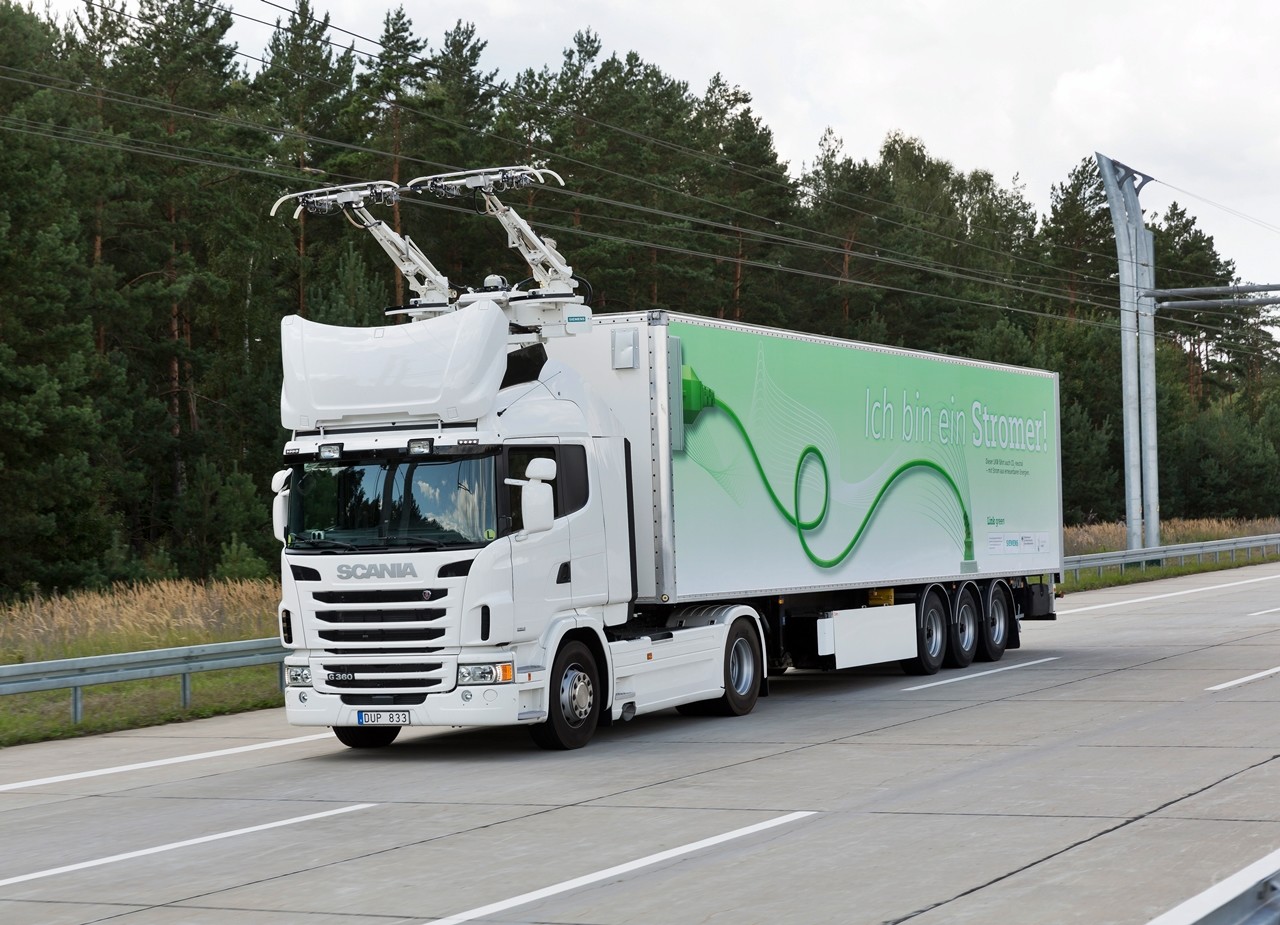
Pensando en el medio ambiente y siendo pioneros en el uso eficiente de energías libre de contaminación, Suecia da un paso agigantado creando la primera autopista eléctrica del mundo, buscando conseguir, que para el 2030, el sector transporte de esta nación no utilice combustible fósil.
Lo interesante de este sistema de autopistas es que los vehículos pesados se pueden alimentar de la red eléctrica instalada en la vía, gracias a un sistema catenario (línea aérea de alimentación que transmite energía eléctrica a las locomotoras u otro tipo de motores).
Se trata de un proyecto conocido como eHighway (de la empresa SIEMENS), que se puso en marcha en un tramo de dos kilómetros de la autopista E 16, al norte de Estocolmo. Los vehículos híbridos que cuentan con un pantógrafo inteligente (dispositivo que tienen en su parte superior los trenes eléctricos y otros vehículos para la toma de corriente del tendido aéreo), que al entrar en este trecho de la vía se conecta a las líneas de electricidad. Si quieres adelantar un vehículo, no es problema, a diferencia de los autobuses eléctricos, los camiones se pueden desconectar del sistema para adelantar a otro auto, gracias a los sensores que activan el mecanismo articulado que llevan en la parte superior.
Por los momentos este sistema está dirigido a los vehículos de transporte pesado, no siempre es posible movilizar toda la mercancía en ferrocarril, esta tiene que ser transportada por camiones que combinan un servicio fiable con el mínimo impacto ambiental.
ID used to identify users for 24 hours after last activity
24 hours
_gat
Used to monitor number of Google Analytics server requests when using Google Tag Manager
1 minute
__utmx
Used to determine whether a user is included in an A / B or Multivariate test.
18 months
_ga
ID used to identify users
2 years
_gali
Used by Google Analytics to determine which links on a page are being clicked
30 seconds
_ga_
ID used to identify users
2 years
__utmv
Contains custom information set by the web developer via the _setCustomVar method in Google Analytics. This cookie is updated every time new data is sent to the Google Analytics server.
2 years after last activity
__utmb
Used to distinguish new sessions and visits. This cookie is set when the GA.js javascript library is loaded and there is no existing __utmb cookie. The cookie is updated every time data is sent to the Google Analytics server.
30 minutes after last activity
__utmc
Used only with old Urchin versions of Google Analytics and not with GA.js. Was used to distinguish between new sessions and visits at the end of a session.
End of session (browser)
__utmz
Contains information about the traffic source or campaign that directed user to the website. The cookie is set when the GA.js javascript is loaded and updated when data is sent to the Google Anaytics server
6 months after last activity
_gac_
Contains information related to marketing campaigns of the user. These are shared with Google AdWords / Google Ads when the Google Ads and Google Analytics accounts are linked together.
90 days
__utma
ID used to identify users and sessions
2 years after last activity
__utmt
Used to monitor number of Google Analytics server requests
10 minutes
Marketing cookies are used to follow visitors to websites. The intention is to show ads that are relevant and engaging to the individual user.
Pinterest Tag is a web analytics service that tracks and reports website traffic.
Our Website uses X buttons to allow our visitors to follow our promotional X feeds, and sometimes embed feeds on our Website.
2 years
guest_id
This cookie is set by X to identify and track the website visitor. Registers if a users is signed in the X platform and collects information about ad preferences.
2 years
personalization_id
Unique value with which users can be identified by X. Collected information is used to be personalize X services, including X trends, stories, ads and suggestions.